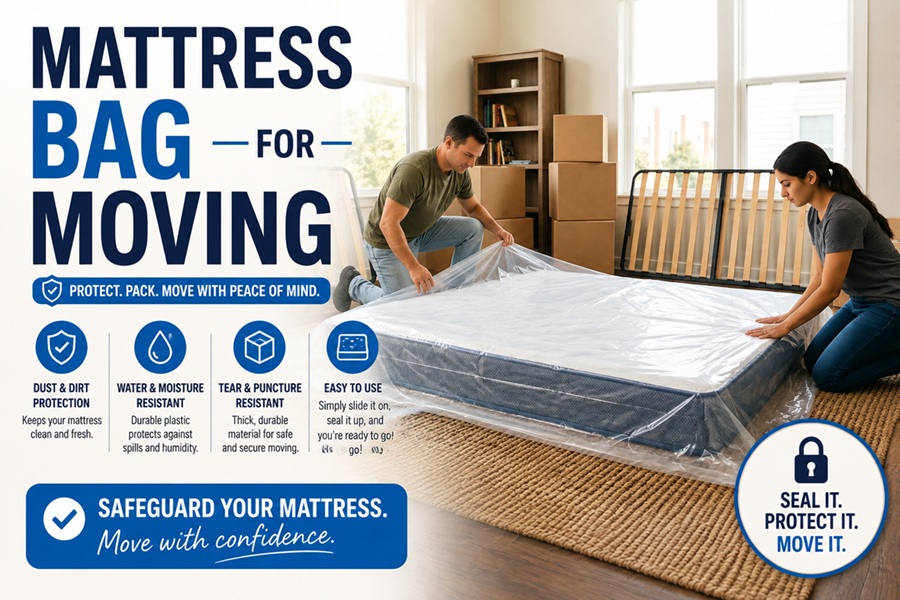
Plastic Mattress Cover for Moving: Protect Your Mattress
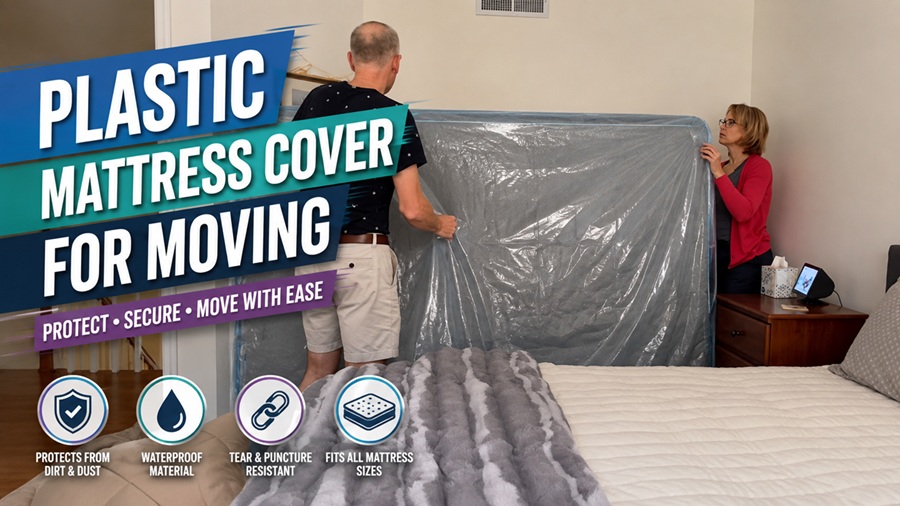
A plastic mattress cover for moving is an inexpensive protective bag, usually clear polyethylene, that wraps around your mattress to shield it from dirt, dust, moisture, and scuffs while it is carried, loaded, and transported. Because a mattress is expensive and directly affects your sleep and hygiene, keeping it clean and dry during a move is well worth the small cost of a plastic cover, which guards against the stains, water damage, and grime that a mattress can otherwise pick up. Plastic covers come in sizes to match standard mattresses and in different thicknesses, and while many are inexpensive and disposable, they are a simple, effective way to make sure your mattress arrives at your new home as clean as it left.
Moving day exposes a mattress to all kinds of hazards, from a dusty truck floor to rain, dirty hands, and rough surfaces, any of which can leave lasting stains or damage. A plastic mattress cover is the simple, affordable answer, forming a protective barrier that keeps your mattress clean and dry. This guide explains how these covers protect your mattress, how to choose the right size and thickness, how to use one effectively, and how they compare to reusable options, so your mattress stays in top condition through the move.
| What it is | A plastic bag that wraps and protects a mattress |
| Material | Usually clear polyethylene plastic |
| Protects against | Dirt, dust, moisture, and scuffs |
| Why it matters | Mattresses are costly and affect hygiene |
| Sizes | Match to standard mattress sizes |
| Thickness | Choose based on protection needed |
| Cost | Inexpensive, often disposable |
| Benefit | Keeps the mattress clean and dry during a move |
Why Protect a Mattress When Moving
It is easy to underestimate how much a mattress is exposed to during a move, but the hazards are real and can cause lasting damage. As it is carried out of the house, set down, loaded into a truck, and transported, a mattress encounters dirty floors, dusty surfaces, rain or damp, and the general grime of moving, any of which can stain or soil it. Because the mattress is often set on the ground or leaned against surfaces, it readily picks up dirt and moisture.
This matters because a mattress is a significant investment that directly affects your sleep and hygiene, so arriving with a stained, damp, or dirty mattress is both unpleasant and costly. Protecting it during the move preserves its cleanliness and condition. A plastic cover is the simplest, cheapest way to create a barrier between your mattress and all those moving-day hazards, which is why it is such a widely used moving supply.
How a Plastic Cover Protects
A plastic mattress cover works by fully enclosing the mattress in a waterproof, dirt-proof barrier, so nothing outside can reach the mattress itself. This straightforward protection guards against the main moving-day threats.
- Blocks dirt and dust from the floor, truck, and handling
- Provides a moisture barrier against rain, damp, and spills
- Prevents scuffs and surface soiling as the mattress is moved
- Keeps the mattress clean and hygienic during transport
- Helps the mattress arrive in the same condition it left
Choosing the Right Size
Getting the right size is important so the cover fits and fully protects the mattress. Plastic mattress covers are made to match standard mattress sizes, so select the cover that corresponds to yours for a proper fit that encloses the whole mattress. A cover that is too small will not fit over the mattress, while one that is reasonably sized wraps it completely, leaving no exposed areas for dirt or moisture to reach. Mattress thickness varies, so a cover with a little room to accommodate your mattress’s depth is helpful. Knowing your mattress size before buying ensures you get a cover that fits and does its job of fully protecting the mattress.
Thickness and Quality
Plastic mattress covers come in different thicknesses, and choosing an appropriate one affects how well it holds up during the move. A thicker, more durable plastic resists tearing and punctures better, which matters given the rough handling and surfaces a mattress encounters while moving, whereas a very thin cover may tear and let dirt or moisture through. For a move where the mattress will be handled a lot, loaded into a truck, and possibly exposed to the elements, a sturdier cover offers more reliable protection. Balancing cost against durability, a reasonably thick cover is usually worth it to ensure the protection actually lasts through the entire move rather than failing partway.
How to Use a Plastic Mattress Cover
Using a plastic mattress cover is simple, and a few steps ensure it protects effectively throughout the move. The goal is to fully enclose and secure the mattress before it faces any hazards.
- Choose the correct cover size for your mattress.
- Slide the mattress into the cover or wrap the plastic around it before moving it.
- Ensure the entire mattress is enclosed with no exposed areas.
- Secure any opening, using tape if needed, so the cover stays closed.
- Keep the cover on while carrying, loading, and transporting the mattress.
- Remove and dispose of or store the cover once the mattress is safely inside.
Disposable vs Reusable Options
Plastic mattress covers are often inexpensive and treated as disposable, used for a single move and then discarded, which is convenient and low-cost for a one-time move. That said, if you expect to move again, store a mattress long-term, or want something more durable, there are heavier reusable mattress bags, including sturdier fabric or vinyl options, some with handles for easier carrying. For a straightforward, budget-friendly one-time move, a simple plastic cover does the job of keeping the mattress clean and dry. For repeated use or added durability and features, a reusable bag may be a better investment. Choosing between them comes down to how many times you will use it and how much protection and convenience you want.
Frequently Asked Questions
Do I need a plastic cover to move a mattress?
It is highly recommended. A mattress is exposed to dirt, dust, moisture, and scuffs during a move, any of which can stain or damage it. An inexpensive plastic cover forms a barrier that keeps your costly mattress clean and dry, which is well worth the small cost.
What size plastic mattress cover should I get?
Choose the cover that matches your mattress size for a proper fit that fully encloses it. A little room for your mattress’s thickness helps. Confirm your mattress size before buying so the cover fits and leaves no exposed areas.
Are thicker plastic mattress covers better?
For moving, a thicker, more durable plastic resists tears and punctures better, which matters given the rough handling and surfaces involved. A very thin cover may tear and let dirt or moisture through, so a reasonably sturdy cover is usually worth it.
Are plastic mattress covers reusable?
Many inexpensive plastic covers are treated as disposable for a single move. If you want reusability or more durability, heavier reusable mattress bags, including fabric or vinyl options and some with handles, are available and better suited to repeated use.
Other Ways to Protect Your Mattress in Transit
A plastic cover is the core of mattress protection during a move, but a few additional steps help ensure your mattress arrives in perfect condition, especially for longer moves or rougher handling. Pairing the cover with smart handling gives you the best results.
Keep the mattress flat rather than folded or bent, since folding can damage the internal structure of many mattresses, particularly innerspring types. In the moving truck, position the mattress carefully so it is not crushed under heavy items or left to slide around, and secure it so it stays in place during transit. Loading it against a flat surface rather than on top of uneven items helps it keep its shape.
For longer moves or storage, keeping the mattress dry is especially important, since trapped moisture can lead to mildew, so make sure it is dry before covering it and avoid damp storage conditions. Combining a good plastic cover with careful, flat handling and secure loading protects your mattress fully, so it reaches your new home clean, dry, and undamaged, ready for a good night’s sleep.
- Keep the mattress flat, not folded, to protect its structure
- Position it in the truck so it is not crushed or sliding
- Secure it so it stays in place during transit
- Make sure it is dry before covering to prevent mildew
- Combine the cover with careful, flat handling
Final Thoughts
A plastic mattress cover for moving is a simple, inexpensive way to protect one of your most valuable and personal possessions from the dirt, moisture, and scuffs of moving day. By fully enclosing the mattress in a waterproof, dirt-proof barrier, it helps your mattress arrive as clean and dry as it left. Choose the right size and a reasonably durable thickness, enclose the mattress fully before moving it, and keep the cover on through transport. Whether you use a disposable plastic cover for a one-time move or a reusable bag for the long term, protecting your mattress is a small step that pays off in keeping it clean and hygienic.