Tag: fire pit FAQ

  • The Complete Guide to Backyard Fire Pit Landscaping Ideas

    The Complete Guide to Backyard Fire Pit Landscaping Ideas

    A fire pit earns its place in a backyard when the ground around it is designed with the same care as the pit itself. That means a stable, fire-safe surface, seating that actually fits the space, and plant choices that won’t need to be ripped out the first time embers drift. Skip that planning and even a beautiful fire pit ends up looking like it was set down in the wrong spot.

    This guide walks through the layout decisions, style directions, plant pairings, seating layouts, and material choices that turn a fire pit from a lone feature into a full outdoor room — plus answers to the questions homeowners ask most often before starting the project.

    Fast Facts Table

    Detail General Guideline
    Clearance from house or fence 10–15 feet minimum
    Clearance from tree canopies 15–20 feet minimum
    Base surface options Gravel, pavers, poured concrete, flagstone
    Comfortable seating radius 12–16 feet across
    DIY project cost range $300–$900
    Professionally installed cost range $1,500–$6,000
    Fuel choices Wood-burning, natural gas, propane
    Best season to build Spring or early fall, before ground freezes

    Step One: Reading Your Yard Before You Design Anything

    Every good fire pit layout starts with a walk around the yard, not a shopping trip. Note where the sun sits in the evening, which direction prevailing wind tends to blow, and how the ground slopes after rain.

    A pit set at the low point of the yard will collect water and mud. One placed too close to a fence line may violate local fire codes before construction even begins. Twenty minutes of observation upfront saves a lot of rework later.

    Checking Local Codes First

    Many municipalities set minimum distances for open flame features from structures, property lines, and overhead branches. Some require a permit for permanent gas lines. A quick call to the local building department avoids a costly redo.

    Why Landscaping Changes How a Fire Pit Feels

    Two homeowners can install the exact same steel fire bowl and end up with completely different results. One drops it on bare lawn; the other builds a gravel pad, adds a low stone border, and plants a few ornamental grasses nearby. The second version reads as a finished feature rather than a temporary setup.

    Factor No Landscaping Thoughtful Landscaping
    First impression Looks temporary, incomplete Reads as a planned outdoor room
    Ground condition Grass dies, mud forms nearby Durable, walkable surface
    Fire safety Higher risk from nearby grass/mulch Fire-safe buffer zone built in
    Home value impact Negligible Recognized as a livable outdoor upgrade

    Fire Pit Style Ideas That Work With Your Existing Landscape

    Rather than picking a fire pit style first, it usually works better to look at what’s already growing and built in the yard, then choose a direction that complements it.

    Rustic Stone Fire Pit With a Gravel Apron

    Fieldstone or dry-stacked stone paired with pea gravel gives a cabin, lake-house feel. It suits yards with mature trees, wood fencing, or an already-informal layout, and it tolerates an imperfectly level yard better than most other styles.

    Modern Sunken Fire Pit With Large-Format Pavers

    Set slightly below grade and ringed with oversized concrete or porcelain pavers, this style suits contemporary homes with clean architectural lines. Built-in bench seating and structured plantings — think boxwood or ornamental grass in straight rows — complete the look.

    Desert and Xeriscape Fire Pit

    A steel or concrete fire bowl set in decomposed granite, surrounded by boulders and drought-tolerant succulents, suits dry climates and low-water landscaping goals. It’s also one of the lowest-upkeep styles on this list.

    Cottage Garden Fire Pit

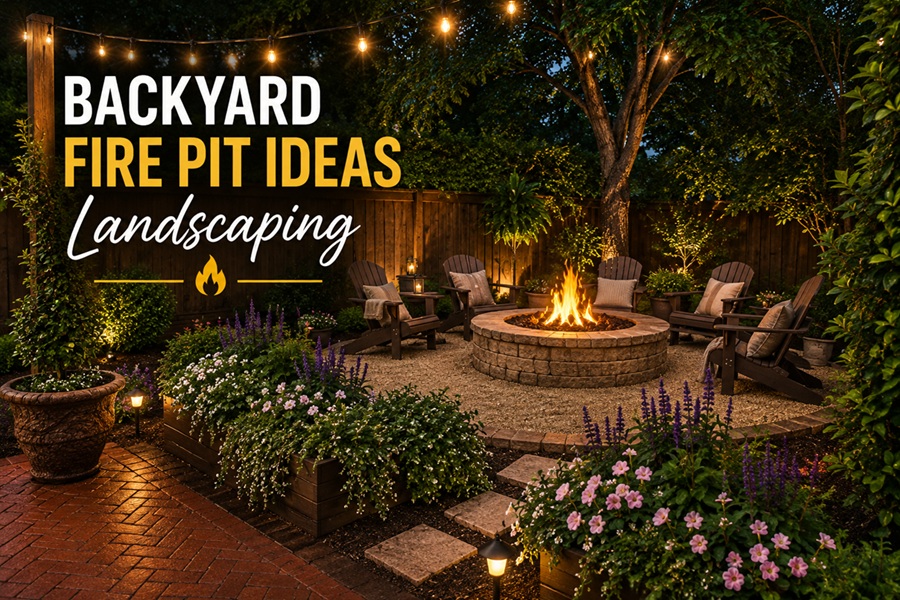
    A brick or stacked-stone pit surrounded by layered perennial beds — lavender, coneflower, salvia — turns the area into more of a garden nook than a patio feature. Flowering plants should sit a few feet back from the flame to stay safe and healthy.

    Coastal-Inspired Fire Pit

    Pale pavers, beach stone, and weathered wood furniture create a relaxed, breezy feel. This style leans on texture and neutral color rather than heavy planting, keeping maintenance minimal.

    Woodland Fire Pit Nook

    Tucked at a safe distance into an existing tree line, with a simple stone or metal pit set on mulch or gravel, this style creates a quiet retreat separate from the main lawn. Low uplighting on nearby trunks adds atmosphere without overpowering the setting.

    Plant Choices That Pair Safely With a Fire Pit

    Not every plant belongs near an open flame. The best choices are slow-growing, low-flammability, and don’t drop a lot of dry debris.

    Plant/Element Distance From Flame Reason It Works
    Ornamental grasses 4+ feet Movement and texture, easy to trim back
    Sedum and succulents 2–3 feet Naturally fire-resistant, low water needs
    Lavender 3+ feet Fragrant, drought-tolerant, tidy growth habit
    Low stone or brick edging Edge of seating zone Keeps grass and mulch from creeping in
    Gravel or decomposed granite base Entire pit footprint Fire-safe, drains well
    Raised planting bed Perimeter of the seating zone Adds height, separates pit from open lawn

    Avoid resinous shrubs like juniper close to the flame — they ignite easily and burn fast. Mulch beds should be pulled back at least a few feet from any fire feature.

    Matching Seating to Yard Size

    A layout that works in a small courtyard will feel cramped in a large backyard, and vice versa. Sizing the seating to the space keeps the area comfortable rather than either crowded or awkwardly empty.

    Yard Size Seating Approach Approximate Capacity
    Small (under 15×15 ft) Movable chairs, no permanent structures 4 people
    Medium (15×20 ft) One built-in bench plus a few chairs 6–8 people
    Large (20×25 ft or more) Full bench ring plus a separate lounge area 10 or more people

    Materials and Cost Planning

    Material choice affects both the upfront cost and how much upkeep the space needs going forward. Gravel is the cheapest and fastest option; poured concrete or natural stone cost more but need far less attention over time.

    Material Cost Tier Long-Term Maintenance
    Gravel base $ Occasional raking and topping up
    Paver patio $$ Light weeding between joints
    Poured concrete $$ Minimal, occasional resealing
    Natural stone $$$ Low upkeep, higher labor cost upfront

    A prefab steel fire bowl on a gravel pad is usually the fastest, most budget-friendly route to a finished-looking setup. A sunken pit, gas line, or built-in seating is generally worth hiring a landscaper for.

    Lighting and Pathway Details

    A fire pit rarely stands alone after dark. Low path lighting leading from the house, plus subtle uplighting on nearby trees or shrubs, extends the usable hours of the space and makes the walk out to the pit safer underfoot.

    String lights overhead are a popular, budget-friendly finishing touch, especially over a seating area used for more than just fire-pit nights.

    Maintaining the Space Season to Season

    A little upkeep keeps a fire pit landscape looking sharp for years. Clear leaves and debris from the base regularly, especially in fall, and keep a fitted cover on the pit itself between uses to protect it from rain and snow.

    Check local burn restrictions each season — some regions limit or ban wood-burning fires during dry spells. Gravel or decomposed granite bases benefit from a fresh top-up roughly once a year to stay level and full.

    Frequently Asked Questions

    How far should a fire pit be from the house?

    Most local codes call for at least 10 to 15 feet of clearance from the house, fence lines, and any structure. Always confirm the exact distance with local regulations before building, since requirements vary by area.

    What is the cheapest base material for a fire pit?

    Gravel is generally the most budget-friendly base. It’s fire-safe, drains well, and can be installed in a weekend without special equipment, though it needs occasional raking and topping up.

    Can I put a fire pit on grass?

    It’s not recommended long-term. Direct heat kills grass and creates a fire hazard from dry blades near the flame. A gravel, paver, or stone pad underneath is a safer and longer-lasting choice.

    What plants should I avoid near a fire pit?

    Skip resinous, oily shrubs like juniper and cedar, along with anything that drops a lot of dry leaves or needles. These ignite quickly and can carry a stray ember further than expected.

    Do I need a permit to build a fire pit?

    It depends on the type and location. A portable fire bowl usually doesn’t require one, but a permanent, in-ground pit — especially one connected to a gas line — often does. Checking with the local building department is the safest first step.

    How big should the seating area around a fire pit be?

    A comfortable seating zone typically spans 12 to 16 feet across, giving enough room for chairs or benches to sit a safe distance from the flame while still feeling like one connected space.

    Final Thoughts

    The fire pits that get used the most tend to be the ones built to fit the yard around them, not dropped in as an afterthought. Starting with a safe, level base, sizing the seating to the space, and choosing plants that can handle the heat sets the whole project up to last for years rather than one summer.