Popcorn Ceilings and Asbestos: What Homeowners Need to Know
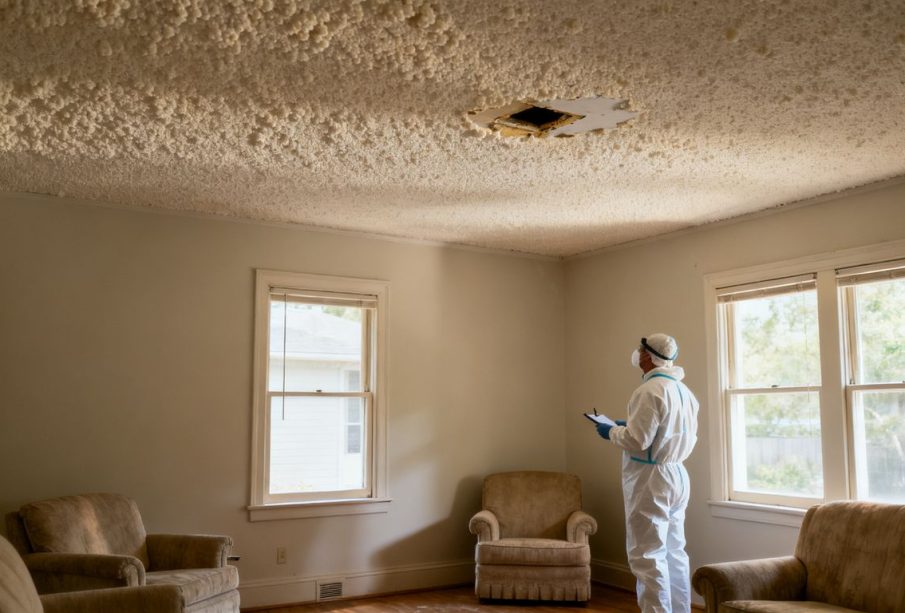
Popcorn ceilings are a textured finish, and some older products used to create them contained asbestos. The material may remain in a home long after its use in new products was restricted. A ceiling’s age and condition can help guide next steps, but neither can confirm what is in it.
How asbestos was used in textured ceiling products
Asbestos was added to some building products for properties such as heat resistance and strength. It appeared in some spray-applied ceiling textures, which were used to create a bumpy finish and cover small surface imperfections. Not every textured ceiling contained asbestos, and products could vary even when they looked similar.
Why the age of a home can offer clues but not confirmation
Homes built or renovated several decades ago are more likely to have materials installed during periods when asbestos was used in construction products. That makes a home’s age a useful clue, not a test result. Renovations, replacement ceilings, and differences in product availability can all affect what is present. Even a ceiling in a newer home could cover an older layer, so installation history alone is not enough to settle the question.
How asbestos exposure can occur when material is disturbed
Asbestos-containing material can become a concern when it is damaged or disturbed and fibers are released into the air. Scraping, sanding, drilling, or cutting through a textured finish can create dust, as can some repair or renovation work. Fibers are too small to identify by sight, and the absence of visible dust does not establish that no fibers were released. The practical precaution is to avoid disturbing a suspected ceiling until its status is known.
What condition of the ceiling can mean for potential risk
An intact ceiling that is not being disturbed is less likely to release fibers than material that is crumbling, peeling, or damaged by water. That difference can help determine whether access should be limited and whether a professional should assess the area promptly. Condition does not reveal whether asbestos is present, however, and an apparently sound surface is not proof that it is asbestos-free. Avoid disturbing the texture while arranging an appropriate assessment.
How to assess a suspected ceiling
A careful assessment separates what can be observed from what can be established through testing. Homeowners can note the ceiling’s condition and any known renovation history without touching or scraping it. When work is planned or damage is present, professional guidance can help determine the next safe step.
Why appearance alone cannot identify asbestos
A popcorn texture, its color, and the age of a home cannot show whether asbestos fibers are present. Asbestos-containing and asbestos-free materials may look alike, and fibers cannot be seen with the naked eye. Photos can document visible damage, but they cannot identify the material. Testing, rather than visual inspection alone, is needed for a reliable answer about the sampled material.
When to arrange a professional inspection
A professional inspection is worth considering before renovation, repair, or installation work that might disturb an older textured ceiling. It is also sensible when the surface is damaged, crumbling, or affected by water. Homeowners can ask local or state environmental or health agencies about applicable requirements and how to find qualified asbestos professionals. An inspection can help clarify where sampling is appropriate and whether other building materials may also need attention.
What to expect during sampling and laboratory testing
A qualified professional can explain the proposed sampling method, the areas to be sampled, and how the material will be handled. The sample is then sent to a laboratory for analysis; homeowners should ask who will perform the analysis and how results will be reported. Depending on the ceiling, a professional may discuss several details in advance:
- Which ceiling area or material layer is being sampled
- Whether visible patches or repairs should be assessed separately
- How the sample location will be left after collection
- When and how the laboratory report will be provided
The report applies to the material represented by the sample, so it helps to understand exactly where that sample came from. A professional can discuss whether additional samples are appropriate if the ceiling is not uniform.
Why collecting a sample yourself can create avoidable exposure
Taking a sample may require cutting or scraping the texture, which can release dust and expose the person collecting it or others nearby. It can also leave uncertainty about whether the sample represents the ceiling or whether it was packaged and handled appropriately. A homeowner who needs a definite answer can avoid that unnecessary disturbance by arranging qualified help instead. This is especially important if the material is already damaged or work is imminent.
What to do before testing
Until testing or inspection clarifies the material, the safest course is to leave the ceiling alone. This does not mean that every suspected ceiling presents an immediate hazard; it means avoiding actions that could release dust before the material is understood. Simple limits on access and activity can reduce the chance of accidental disturbance.
Avoid scraping, sanding, drilling, or removing the texture
Do not scrape or sand the ceiling to improve its appearance, and avoid drilling or cutting into it for fixtures, wiring, or other projects. Even a small alteration can disturb the surface and create dust. If a repair or renovation cannot wait, pause the work and seek advice from a qualified asbestos professional or the relevant local agency. A decorative or practical change is not worth making before the material has been assessed.
Limit access to areas with damaged or crumbling material
If the texture is falling away or has been damaged, reduce activity in the immediate area and avoid touching the loose material. Keep people from walking beneath it or carrying out nearby work that could shake or disturb the ceiling. If the damage is extensive, or there is a risk of material falling, contact a qualified professional for advice on limiting access. A damaged surface calls for caution, but its appearance still cannot confirm asbestos.
Keep children and pets away from debris
Loose debris should not be handled, swept, or vacuumed with ordinary household equipment when asbestos is suspected. Keep children and pets away from the affected area so that they do not touch or track material elsewhere. If fragments have fallen, leave them in place and seek instructions from an asbestos professional or local authority. Avoiding contact is a more prudent first response than attempting a quick cleanup.
What to do if renovation work has already disturbed the ceiling
If work has already created dust or debris, stop the activity and keep others out of the immediate area. Do not sweep, use a household vacuum, or continue work to finish the job. Contact a qualified asbestos professional or local health or environmental agency for advice about next steps, including whether a formal assessment is needed. The details of the disturbance matter, so explain what work occurred and where it took place.
What test results mean
A laboratory result should be read in context: it describes the submitted sample, not necessarily every surface in a home. Homeowners should keep the report and confirm which material and location it covers. If the planned work affects other areas or layers, ask whether the assessment needs to be expanded.
How to interpret a positive result
A positive result means asbestos was identified in the material represented by the sample. It does not, by itself, measure how much fiber may be in the air or establish that someone has been exposed. The next decision depends on the material’s condition, whether it is likely to be disturbed, and the work being considered. A qualified professional can explain management choices for the specific ceiling and applicable requirements.
What a negative result does and does not tell you
A negative result means asbestos was not identified in the sample as analyzed. It does not necessarily establish that every part of the ceiling, an adjoining patch, or a material underneath it is asbestos-free. The report’s sampling scope and the ceiling’s variation matter. Before relying on the result for renovation planning, confirm that the tested material corresponds to the area the work will affect.
Why patches or different ceiling layers may need separate testing
A ceiling can include original texture, later repairs, and one or more layers beneath the visible surface. Those materials may have different compositions, so a sample from one area may not represent a patch elsewhere. If the ceiling visibly changes or records show multiple renovation periods, discuss those differences with the person conducting the assessment. Separate sampling may be appropriate when the materials are distinct or the planned work will reach more than one layer.
Options for managing confirmed asbestos
A positive result does not automatically mean the ceiling must be removed. The choice depends on the material’s condition, the likelihood of disturbance, planned renovations, and relevant rules. Homeowners can discuss the options with qualified professionals and compare how each choice affects future access and maintenance.
When leaving an intact ceiling in place may be appropriate
If the material is in good condition and will remain undisturbed, leaving it in place may be a suitable management choice. This avoids work that could disturb the texture, though the ceiling should be monitored for damage and protected during future projects. A professional can explain what changes to watch for and how to handle planned repairs. Leaving it in place is a management decision, not a claim that the material contains no asbestos.
How encapsulation can cover the textured material
Encapsulation involves applying a covering or coating intended to contain the existing material. It may be considered when the surface can be treated without creating more risk and when the chosen method is appropriate for the ceiling’s condition. A qualified professional should assess whether the material will accept the treatment and explain how the work area will be protected. Any future work must take the concealed material into account.
When removal may be considered
Removal may be considered if the ceiling is badly damaged, if renovations will disturb it, or if another management option is unsuitable. Removing asbestos-containing material can create significant dust if not handled correctly, so it should not be treated as an ordinary do-it-yourself demolition project. Before choosing removal, homeowners can compare it with leaving the material in place or covering it, taking account of the work scope and local rules. The decision should be based on the actual condition and plans for the space.
Why asbestos work may require qualified professionals
Asbestos work can involve containment, protective equipment, careful cleanup, and regulated handling of waste. Requirements differ according to the work and jurisdiction, so homeowners should not assume that standard renovation practices are adequate. Qualified professionals can explain the controls they will use and whether the job requires specific credentials or notifications. Their experience is particularly relevant when material is damaged or removal is planned.
Planning asbestos-related work
A good plan addresses more than the choice to cover or remove a ceiling. It should establish which materials are involved, what rules apply, how the work area will be protected, and how debris will be handled. Getting those details in writing before work begins makes it easier to compare proposals and avoid surprises.
Check state and local requirements before work begins
Asbestos-related requirements can vary by state, locality, building type, and scope of work. Before scheduling a project, check with the relevant state or local environmental or health agency about permits, notifications, and any restrictions that may apply. Federal requirements may also be relevant to some projects. Confirming the rules early helps homeowners understand what must happen before work starts.
Verify contractor licensing, insurance, and experience
Ask whether the contractor holds the credentials required for the specific work in that jurisdiction, and request proof of insurance. It is also reasonable to ask about experience with similar ceiling materials and to check references. A written estimate should identify the proposed scope rather than relying on a broad description such as “ceiling removal.” Clear answers make it easier to assess whether the plan matches the material and the homeowner’s needs.
Ask how the work area will be contained and cleaned
Before approving the work, ask how the contractor will keep dust and debris from spreading beyond the work area. The explanation should cover access restrictions, protection of nearby surfaces, and the planned cleanup process. Homeowners can also ask who will perform the cleanup and how the area will be checked before it is returned to use. A detailed explanation is more useful than a general assurance that the space will be left clean.
Confirm waste disposal and any required clearance procedures
The plan should state how asbestos-related waste will be packaged, transported, and disposed of under applicable rules. Homeowners can ask which facility or process will be used and what records will be provided. Depending on the work and local requirements, clearance procedures or documentation may also be needed before the area is reoccupied. Confirming those arrangements beforehand helps close the loop from containment through completion.