
Two Days That Decide If a Wet Basement Turns Moldy
Anyone who has driven Route 130 after a hard rain knows how quickly the circle fills up and shuts down. Drivers see a traffic headache, but homeowners nearby feel something closer to dread, because the same water that stalls cars has a way of finding basements, crawl spaces and ground floors. If you are dealing with Brooklawn water damage, the most useful thing to understand early is that cleanup runs on a clock, and the first forty eight hours matter more than almost anything you do afterward.
The first hour is about stopping things, not fixing them
Before you grab a mop, work out what is making the situation worse. If water is still coming from a supply line, an appliance hose or a failed sump pump, stop that source first. If water is touching outlets, cords or the electrical panel, stay out and keep the power off until an electrician says it is safe.
Once the source is handled, a few quick moves protect what you can still save.
- Photograph every wet surface, belonging and waterline before anything gets moved
- Lift furniture and boxes off wet floors, especially anything with cardboard bottoms or wooden legs
- Pull up area rugs, since they trap moisture against the floor
- Note the time the water arrived, because that start time shapes every decision that follows
Where the water goes when you stop watching it
Water rarely stays where you first see it. It climbs the bottom of drywall through the paper and gypsum, slips behind baseboards, soaks into insulation and settles into subfloors and the lowest framing. Many homes in this part of South Jersey were built decades ago, and older basements and crawl spaces tend to have limited ventilation, so moisture lingers far longer than it should.
A wall can look perfectly dry and still hold enough moisture to feed growth. This is why restoration crews carry moisture meters and thermal cameras. A surface wipe down tells you how things look, while a meter tells you how things are.
Not all water deserves the same respect
Water from a broken supply line starts out clean, but it picks up contamination as it travels through building materials and sits. Storm water is a different story. It carries soil, bacteria and runoff, and a backed up sewer line carries something worse.
Porous materials that have touched flood water or sewage, such as carpet, padding, insulation and soft drywall, usually cannot be made safe again and need to be removed. Hard surfaces can often be cleaned and disinfected. If you suspect the water was contaminated, keep children and pets out of the area and wear gloves, boots and a proper mask while you work.
What can be saved and what has to leave the house
Tile, concrete, metal, plastic and sealed wood usually come through well. Carpet may be saved if the water was clean and the response was fast, but the pad underneath almost never is. Soaked drywall and insulation generally go, and crews often cut wall board out a foot or more above the visible waterline to be sure nothing damp stays hidden behind it.
Upholstered furniture is stubborn and rarely dries fully inside two days. Cardboard, loose paper and paperback books go quickly. Photographs and important documents are worth a different approach, because freezing them buys time until a specialist can help, and that is better than letting them sit in a damp pile.
A fan is not a plan
Box fans and a wet vacuum are useful in the opening hours, but they mostly dry surfaces. Real structural drying uses controlled airflow, dehumidifiers and repeated readings until the material itself, not just its surface, reaches a normal moisture level. Indoor humidity ideally sits between 30 and 50 percent, and staying under 60 percent is the general ceiling.
There is one caution worth knowing. If mold is already visible, aggressive fans can push spores into rooms that were clean. Rutgers Cooperative Extension keeps a short fact sheet on flooding, mold and health that explains this well for New Jersey households.
Signs the clock has already run out
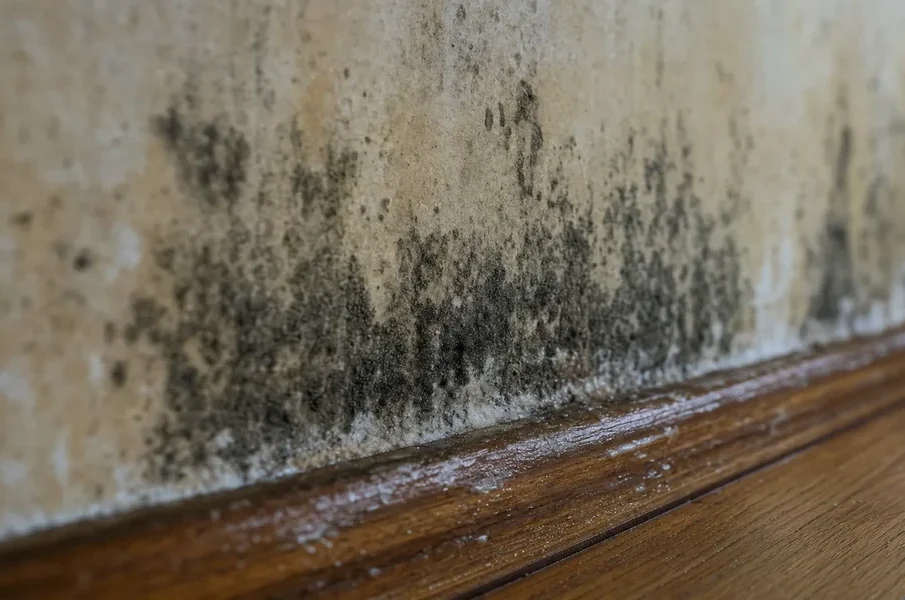
Mold can begin growing on wet materials within a day or two, though not every wet space produces it. The signals tend to show up quietly.
A musty smell that returns after cleaning is the most common one. Stains that spread or darken, paint that bubbles, wallpaper that lifts at the seams and baseboards that start to warp all point to moisture still trapped somewhere.
Small patches on hard surfaces, roughly under ten square feet, can often be scrubbed with detergent and water by a careful homeowner who has fixed the moisture source first. Larger areas, mold inside walls and anything that followed sewage should go to trained people. Testing makes sense when you smell mold but cannot find it, or when you want a documented baseline after cleanup. When mold is plainly visible, the better spend is on fixing the moisture and removing the growth rather than on proving it exists.
Knowing when the job outgrows a weekend
Some jobs are simply bigger than a shop vac and a free Saturday. Mold Defense LLC works with homes and businesses across New Jersey, Delaware and Pennsylvania, and its team includes certified mold inspectors and a certified mold remediator. Water damage cleanup and structural drying sit alongside mold testing, mold removal, odor removal and sewage cleanup, so one crew can follow a problem from the first extraction to the final inspection. Their stated goal is to make sure the mold does not return, which is a sensible standard for any project of this kind. You can reach them at (609) 405-6420 or james@mold-defense.com.
The paperwork nobody wants to think about
Insurance tends to surprise people at the worst moment. A burst pipe may fall under a standard homeowners policy, while rising groundwater or surface flooding often belongs to separate flood coverage. The difference can decide who pays.
Call your insurer early and share the photos you took in the first hour. Keep receipts for drying equipment, disposal fees and any temporary housing. Hold off on throwing away damaged items until they have been documented, since an adjuster will want proof of what was lost.
Making the next storm boring
Most repeat water problems trace back to a handful of fixable details. A sump pump with a battery backup, tested before heavy weather arrives, earns its cost the first night the power drops. Gutters need to stay clear, and downspouts should release water several feet from the foundation. The soil around the house should slope away from the walls, and visible foundation cracks deserve sealing before the next season.
Inside, raise stored belongings onto shelves, replace aging washing machine hoses and run a dehumidifier through the humid months. None of this is dramatic, and that is exactly the point. When the circle floods again, the best outcome is a house where the water outside stays outside, and the only thing you have to deal with is the traffic.


